
We love hair beads. They are a big part of our shop and a big part of the fun of braiding. We also know that a hair bead is exactly the kind of small, shiny, colorful thing a toddler wants to put in their mouth. This guide is the honest version of how to use beads safely, and when not to use them at all.
Why beads are a choking hazard
Toddlers explore the world with their mouths, and beads are small, smooth and round. That combination is the problem. In the United States, the Consumer Product Safety Commission uses a small-parts test cylinder about 1¼ inches wide to decide which toy parts are a choking hazard for children under 3: anything that fits inside counts. Almost every hair bead fits easily, and so do snaps and many barrettes.
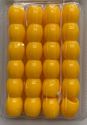
Choking is not the only concern. Young children also push small objects into their noses and ears. And the beads on your child's head are only part of the risk. A bead that works loose and drops onto the floor, into a car seat or into a bed is just as easy to pick up, by your child or by a younger sibling.
Age guidance
| Age | Our guidance |
|---|---|
| Babies and children under 3 | Skip beads and other small hair accessories. Choose a soft headband, a bandana or a simple style with nothing that can come off. |
| 3 to 5 years | Beads may be fine for a child who no longer puts things in their mouth, with close supervision. Secure every end, check daily, and use fewer beads rather than more. |
| School-age kids | Generally fine. Teach your child to tell you when a bead comes loose, never to put beads in their mouth, and to keep beads away from younger brothers and sisters. |
Every child is different. You know whether your four-year-old still chews on everything, and that matters more than any chart. When in doubt, wait.
How to secure beads properly
- Close every end. Put a snap below the last bead on every braid or twist so the beads cannot slide off. Snaps hold beads on without foil, which can tear and slip. Our guide on how to use hair snaps shows the technique.
- Leave enough tail. The snap needs a short tail of hair to wrap around its hinge. If the braid ends too close to the last bead, the snap will not hold.
- Use sound beads only. Throw away any bead that is cracked or chipped. Broken beads can have sharp edges and break into even smaller pieces.
- Do not overload. A few beads per braid is plenty for a young child. Heavy clusters swing, loosen faster and pull on the roots.
- Keep them near the ends. Beads near the tips put less strain on the scalp than beads pushed up close to the roots.
Daily habits that help
- Morning and bedtime check. Run your fingers down every braid end. If a snap is loose or a bead is missing, fix it straight away.
- Cover at night. A roomy satin bonnet keeps any bead that works loose inside the cap instead of in the bed. See our guide to satin sleep caps and bonnets.
- Check the usual spots. Car seats, strollers, couch cushions and the bath are where loose beads end up.
- Store spares safely. Keep unused beads and snaps in a closed container, up high, out of sight and out of reach.
- Talk to daycare or preschool. Ask whether they allow beads and let them know to watch for loose ones.
Other things to watch
Weight and tension. Heavy beads on tight braids pull at the hair follicles. Over time, that kind of pulling can cause hair loss at the edges. If your child complains of pain or you see bumps along the hairline, take some beads off and loosen the style. Our guide to protective styles for kids covers tension in more detail.
Rough edges. Run a fingertip over beads and barrettes before they go in. Anything with a sharp seam can scratch the skin or snag the hair.
If a bead goes missing
Look for it first: the floor, the bed, the car seat, the bath. If you think your child may have swallowed a bead or put one in their nose or ear but they are breathing normally and seem fine, call your pediatrician for advice. If your child is choking, coughing hard, wheezing or struggling to breathe, call 911 immediately.
Every parent and caregiver of a young child can benefit from learning infant and child CPR and choking first aid. Classes are offered by organizations such as the American Red Cross and by many local hospitals.
Gentler options for little ones
Babies and toddlers can still have fun hair. Stretchy ballerina headbands from our Headbands & Caps page, a soft bandana or a neat set of cornrows with no decoration at all are all lovely. Keep a close eye on any accessory, even a headband, and remove it at nap time and bedtime. Beads can wait a little while. There will be plenty of time for rainbow pony beads and glitter, and when that time comes you will find them on our Hair Beads page, along with ideas in our post on back-to-school braid styles with beads.
This guide is general information for parents, not medical advice. If you have questions about your child's health or safety, talk to your pediatrician.